How Property Managers Are Quietly Losing 10–15 Hours a Week to Manual Work (And How Automation Fixes It)

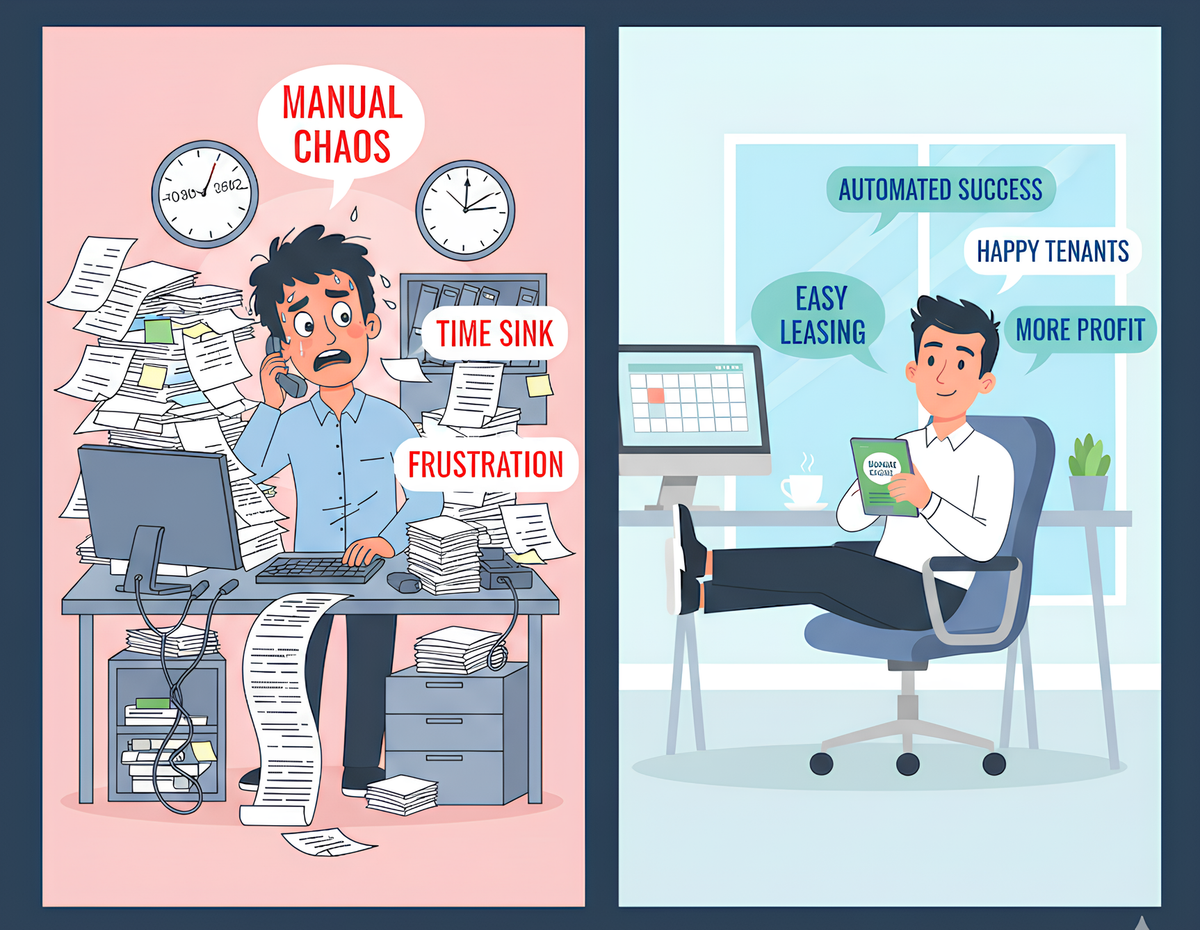
Property management is not short on software.
Most teams already use a mix of property management systems, accounting tools, email, spreadsheets, and vendor portals. And yet, many property managers still feel like they’re constantly catching up.
The issue isn’t a lack of tools.
It’s the amount of manual work happening between them.
The Hidden Cost of “Just a Few Minutes”
On paper, most daily tasks don’t look that bad.
- Updating a lease record
- Following up on a maintenance request
- Notifying an owner about a tenant issue
- Copying information from one system to another
- Sending reminders for missing documents
Each task might take 5–15 minutes. Harmless on its own.
But property management is built on volume and repetition.
When you add it up across:
- Dozens (or hundreds) of units
- Multiple stakeholders
- Repeated follow-ups
- End-of-month reporting
Those “small” tasks quietly consume 10–15 hours per week per property manager.
And none of that time is spent on high-value work like improving tenant experience, reducing vacancies, or growing the portfolio.
Why This Work Keeps Falling on Humans
Most of these tasks exist because systems don’t naturally talk to each other.
So humans become the glue.
A change in one system means:
- Manually updating another
- Emailing someone else
- Remembering to follow up later
- Tracking status in yet another place
The work isn’t complex — it’s predictable.
And predictable work is exactly what software is good at handling.
What Automation Actually Means in Property Management
Automation is often misunderstood as:
- Replacing staff
- Ripping out existing systems
- Expensive, all-or-nothing projects
In reality, automation is much simpler.
It’s about defining rules like:
- When this happens → do that
- If something changes → notify the right person
- If information is missing → follow up automatically
- If a deadline is approaching → trigger a reminder
No new processes.
No behavior change for tenants or owners.
Just fewer manual steps behind the scenes.
Real-World Examples of Where Time Is Lost (and Regained)
1. Maintenance Requests
A typical manual flow:
- Tenant submits a request
- Property manager reviews it
- Vendor is contacted
- Owner is notified
- Status updates are tracked manually
With automation:
- Requests are categorized automatically
- Vendors are notified based on rules
- Owners receive updates without manual emails
- Status changes trigger follow-ups automatically
Same outcome. Far less effort.
2. Lease Renewals
Manually:
- Track lease end dates
- Remember when to reach out
- Send reminders
- Chase responses
- Update records
With automation:
- Renewal timelines trigger automatically
- Tenants and owners are notified on schedule
- Responses are tracked without manual follow-up
- Records stay in sync
Nothing gets missed. No last-minute scrambling.
3. Owner Reporting
One of the biggest time sinks:
- Pulling data from multiple systems
- Cleaning it up
- Formatting reports
- Sending them manually
With automation:
- Data is collected on a schedule
- Reports are generated consistently
- Owners receive them automatically
Same report. Every month. Zero repetitive work.
Why Most Teams Delay Automation
The hesitation is understandable.
Property managers worry about:
- Complexity
- Disruption
- Cost
- Being locked into a rigid system
But modern automation doesn’t require big, risky changes.
The most effective teams start small:
- One workflow
- One bottleneck
- One recurring pain point
Automating just 20% of the most repetitive work often delivers the biggest return.
The Quiet Advantage of Automated Teams
Property managers who adopt automation early don’t advertise it.
They just:
- Respond faster
- Miss fewer deadlines
- Operate with smaller teams
- Scale without burnout
They aren’t working harder — they’re removing friction.
What Comes Next
In future posts, we’ll explore:
- Which tasks are worth automating first (and which aren’t)
- Common automation mistakes property managers make
- How small teams compete with much larger firms
- What an “automation-ready” operation actually looks like
If property management feels more manual than it should, you’re not alone.
And it doesn’t have to stay that way.